Adventures: Turn Any Character Into a Game People Play
Adventures on MyBabes.ai turn an ordinary chat into a winnable game. You take one character, hand them a scenario and a secret win condition, and let anyone play it live. Behind the scenes a second AI - the game master - silently scores every message the player sends: good moves push a hidden bar up, bad moves drag it down. Fill the bar and the player wins the reward you set. Empty it and they lose it.
This guide walks the entire builder end to end - all five steps - using one worked example the whole way: a funny, spooky-flirty adventure called The 2 A.M. Exorcism, starring a character named Luna. Every field in the app is explained, with copy-paste prompt examples and the small tricks that separate a game people finish from one they quit on the first reply.
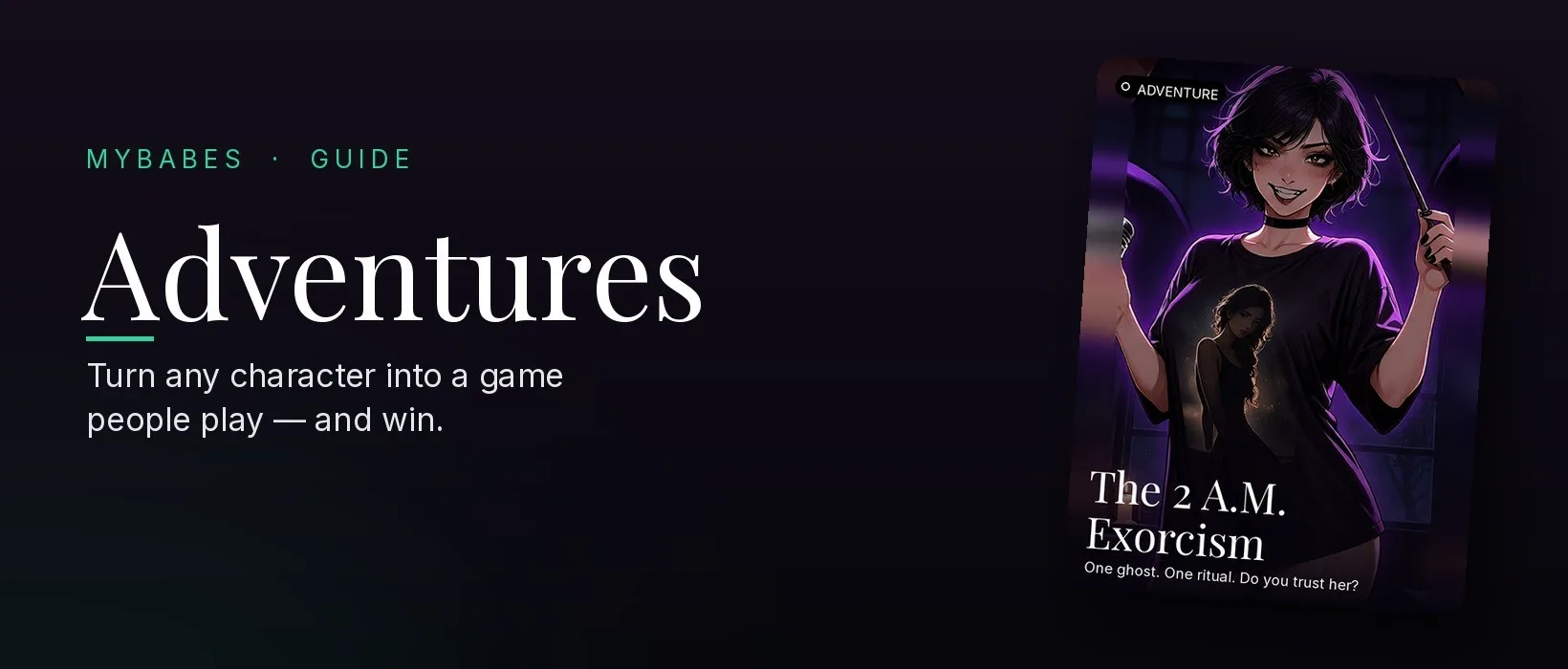
A finished Adventure poster, generated inside the app. The whole point of the builder is to turn a character into this: a game with a cover, stakes and a prize.
What an Adventure actually is
Strip away the wizard and an Adventure is a simple loop:
A character stars in it — their personality, voice and look carry into the game.
A scenario sets the scene and what the character wants right now.
A game master (a second AI) reads your house rules and quietly scores each player message from roughly minus 50 to plus 50.
A win condition — the *target*. When the score bar fills, the player wins.
A reward — one or more images or videos the character “sends” on a win, plus optional consolation media on a loss.
As someone plays, a running journal records facts the story establishes — “she admitted she’s scared of the dark”, “you promised to stay till sunrise” — so later replies stay consistent. Difficulty decides how forgiving the scoring is. That is the whole machine; everything in the builder is just you filling in those blanks.
The five steps at a glance
Character — pick who the Adventure stars.
Adventure — the title, the pitch players read, and the poster.
Settings — how the character behaves in play, plus the opening scene and greeting.
Game master — the referee’s rulebook: the win condition, good moves, bad moves and difficulty.
Reward — the prize on a win, and the consolation on a loss.
You can jump between steps freely, and everything saves as a draft until you publish. Let’s go through each one.
Step 1 — Character
Every Adventure is built around a single character. Pick one you already made or build a new one first — the Adventure inherits their persona, their default look and their voice, so the character does a lot of the work for you.
Choose a character with a strong, specific voice. A well-defined personality — “deadpan goth roommate”, “smug billionaire”, “nervous new coworker” — gives the game master something concrete to score against and keeps the roleplay in character. A blank, generic character produces bland games.
For our worked example we use Luna: an anime-style character with dark hair and smudged smoky eye makeup, written as a dry, mischievous goth roommate. That single line of personality shapes everything downstream — the poster, the greeting, the way the judge reads a “good” move. The character’s look also feeds the poster and the reward images, so a character you already have good gallery shots of will produce better art.
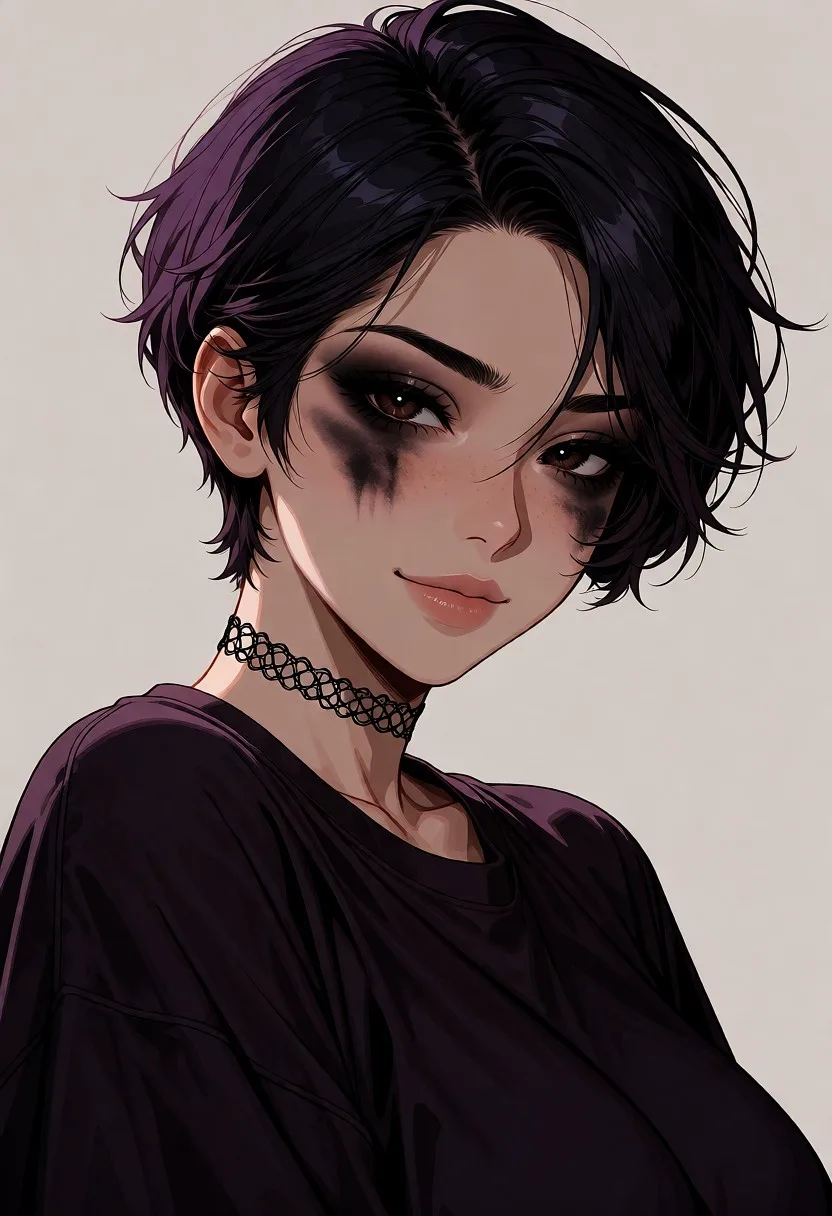
Luna’s base look - the character you choose brings their face, style and voice into every Adventure you build around them.
Step 2 — Adventure: the pitch and the poster
This step is everything a player sees *before* they press play: a title, a description, and a poster.
Title
Keep it short, concrete and a little mysterious — a curiosity gap beats a plain label. Aim for two to five words.
Good: *The 2 A.M. Exorcism*, *The Overbooked Suite*, *The Pint-Glass Prophecy* — specific, intriguing, a scene you can already picture.
Weak: *Fun with Luna*, *Roleplay Game*, *Sexy Adventure* — generic, and they tell the player nothing.
Description
This is the paragraph players read on the poster screen. It sets the scene, the stakes and the tone, and quietly signals what kind of game this is. Keep it tight — a few sentences. Long walls of text get skipped. End on the hook that makes them hit play.
DESCRIPTION — WORKED EXAMPLE
It’s 2 a.m. and your roommate Luna is pounding on your door, hair wild, absolutely certain a ‘lascivious poltergeist’ followed her home from a party. Per three very authoritative TikToks, the only way to banish it is a midnight ritual: candles, salt, and a willing partner performing increasingly unhinged steps. She is dead serious. It is not a ghost. But the night is clearly going somewhere. Play along, keep her believing, and banish the spirit together.
The poster
The poster is the cover art players browse. The builder generates it from a few controls:
Genre chips (Drama, Action, Romance, Fantasy) — a one-tap starting style that colours the mood and the type treatment.
Poster prompt — free text describing the image you want. This is where the real control is.
Show title — bakes the adventure title onto the poster. Usually leave this on.
Scene from the description — lets the generator lift the setting from your description. Handy, but when you have written a specific poster prompt, turning it *off* stops the two from fighting each other.
Show character on the poster — puts your character front and centre. Leave on for a character-led game.
Realistic / Anime — match this to your character’s art style. A realistic style on an anime character (or the reverse) looks off.
The single most useful trick: describe one subject and say so explicitly. The generator loves to add stray extra faces and duplicate figures. A line like *”only one person in the image, no extra faces, no duplicate figures”* at the end of the prompt kills that artifact.
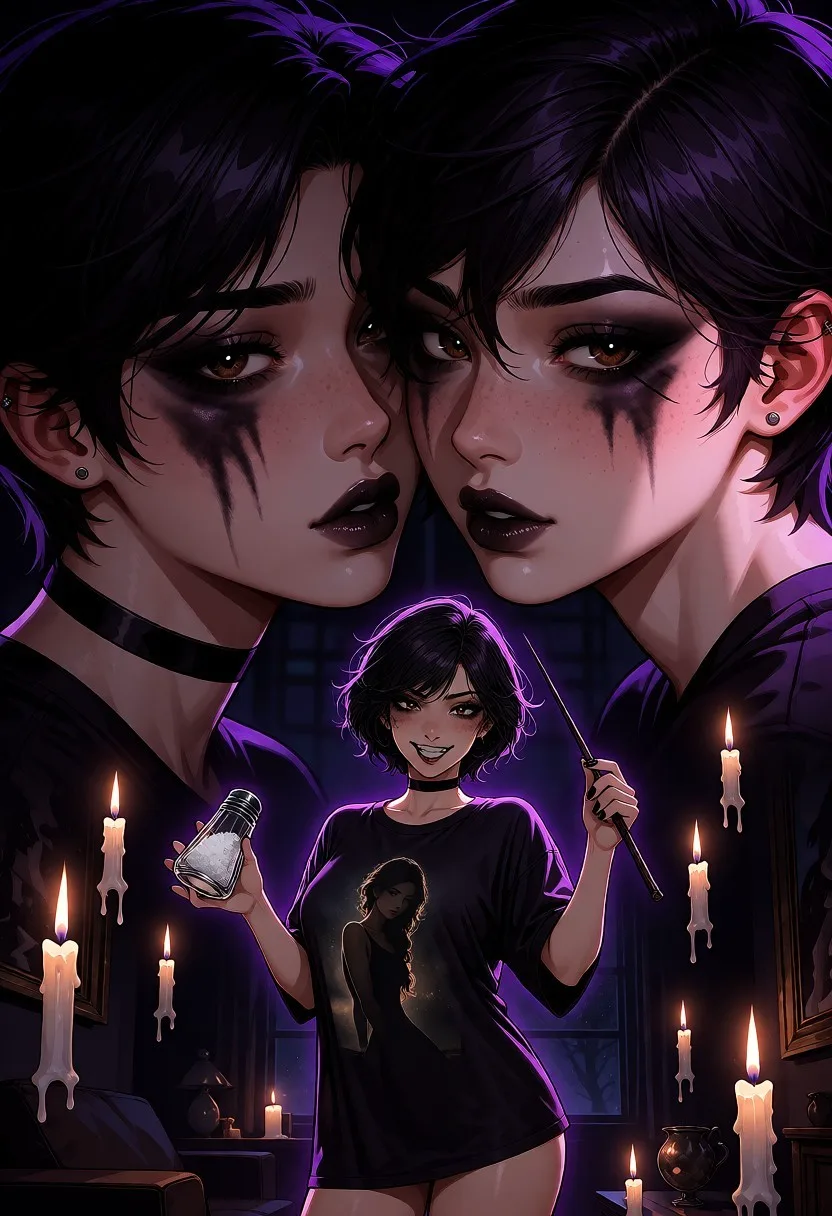
Extra faces and duplicate figures - the generator’s default when you don’t constrain the prompt.

The same scene as one clean single subject, after adding ‘only one person, no extra faces’.
POSTER PROMPT — WORKED EXAMPLE
Movie poster of Luna alone as the single subject, centered, a playful woman with dark hair and smudged smoky eye makeup, in an oversized tee slipping off one shoulder, kneeling in a dark apartment surrounded by flickering candles, holding a salt shaker up like a magic wand with a mischievous grin, wisps of ghostly purple mist, moody candlelight and neon-purple glow, cinematic. Only one person in the image, no extra faces, no duplicate figures.
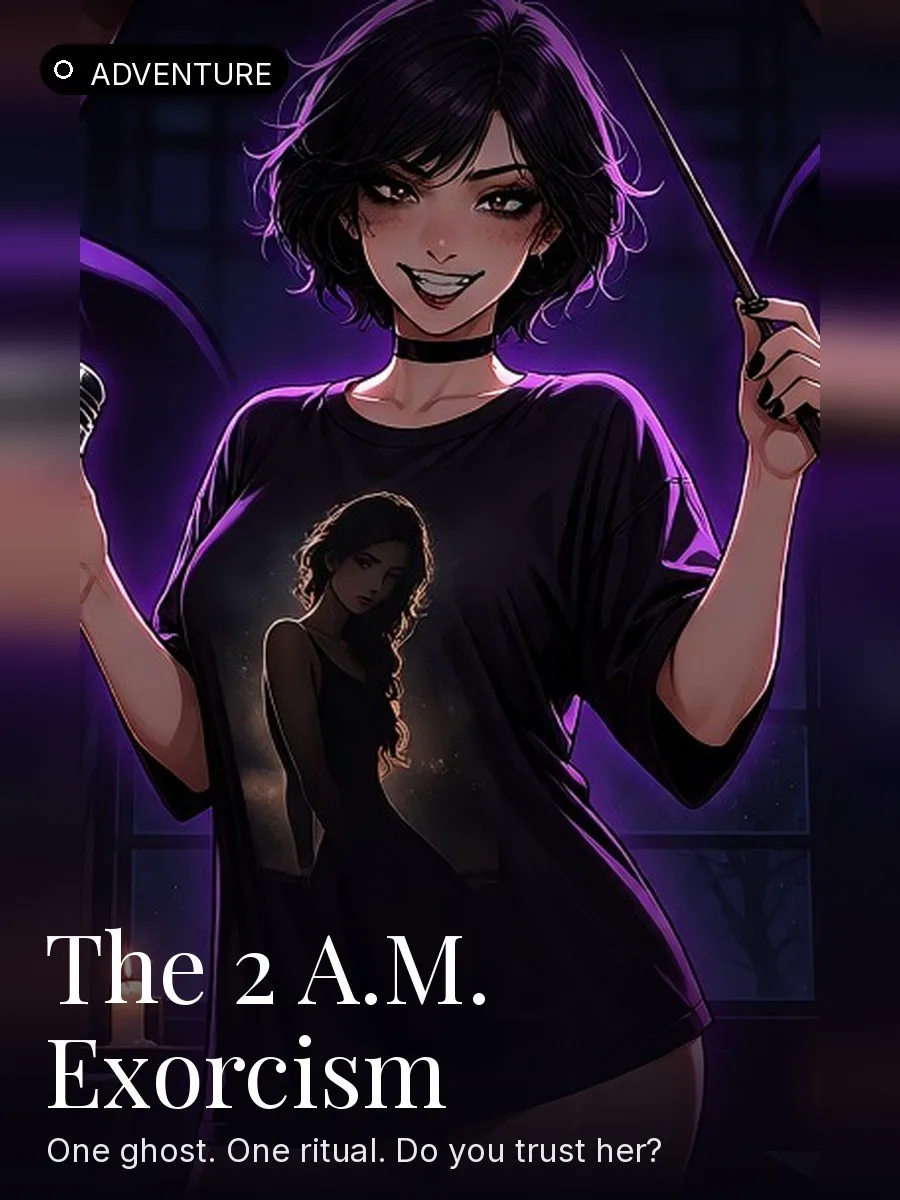
A finished poster. ‘Show title’ baked the name on, the genre gave it the cinematic type treatment, and the poster prompt did the rest. Notice it is a single, clean subject with no stray faces.
Prompts are moderation-checked; flagged prompts will not generate. Describe mood, wardrobe, setting and light rather than explicit acts and you will get a poster that actually renders — the poster is a shop window, not the reward.
Step 3 — Settings: how the character behaves
Step 2 is what players read; Step 3 is what the *character* reads. This is the roleplay brief the AI follows during play, plus the first message and image players see.
Adventure prompt (the scene)
This is the instruction the character follows during the game — the set, the mood, what they are doing right now, what they want. The preset chips (Seduction game, Truth or dare, Corruption game, Traffic stop) drop in a proven template you then edit. Write it in the present tense, from the scene outward.
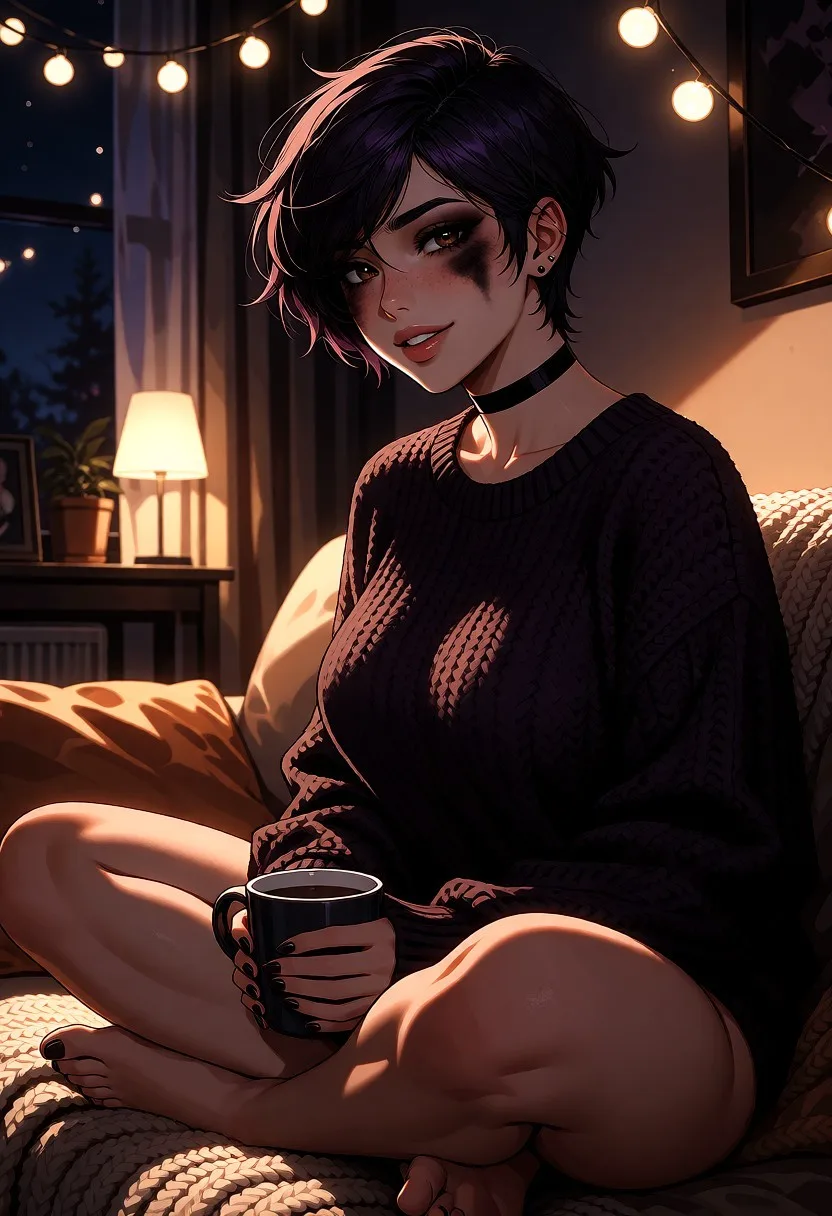
A scene image sets the mood the character plays in - here Luna’s cosy 2 a.m. apartment, a different setting from her poster.
ADVENTURE PROMPT — WORKED EXAMPLE
Your dark apartment at 2 a.m., lit only by phone glow and the mismatched candles Luna dumped on the floor. She’s in an oversized tee, clutching her phone with the ‘ritual instructions’, deadly earnest, a salt shaker in one fist.
Greeting message
The first thing a player sees when the game starts. Write it fully in character, drop them straight into the scene, and end on a question or a dare so the player has an obvious way to respond. A greeting that ends on a hook gets a first reply; a greeting that only describes the room gets a shrug.
GREETING MESSAGE — WORKED EXAMPLE
Luna shoulders past you into the dark, dumps an armful of candles on the floor, and spins around wide-eyed. “Okay — do NOT freak out — but it followed me home. The ghost. The…” she squints at her phone, “…’lascivious entity.’ We have to do the ritual. Tonight. Right now.” She grabs your hands, deadly serious. “Do you have salt. And more importantly — do you trust me?”
Greeting image
Pick a portrait from the character’s gallery to open on. Portrait shots work best — it is the first frame of the game, so choose one that matches the greeting’s mood.
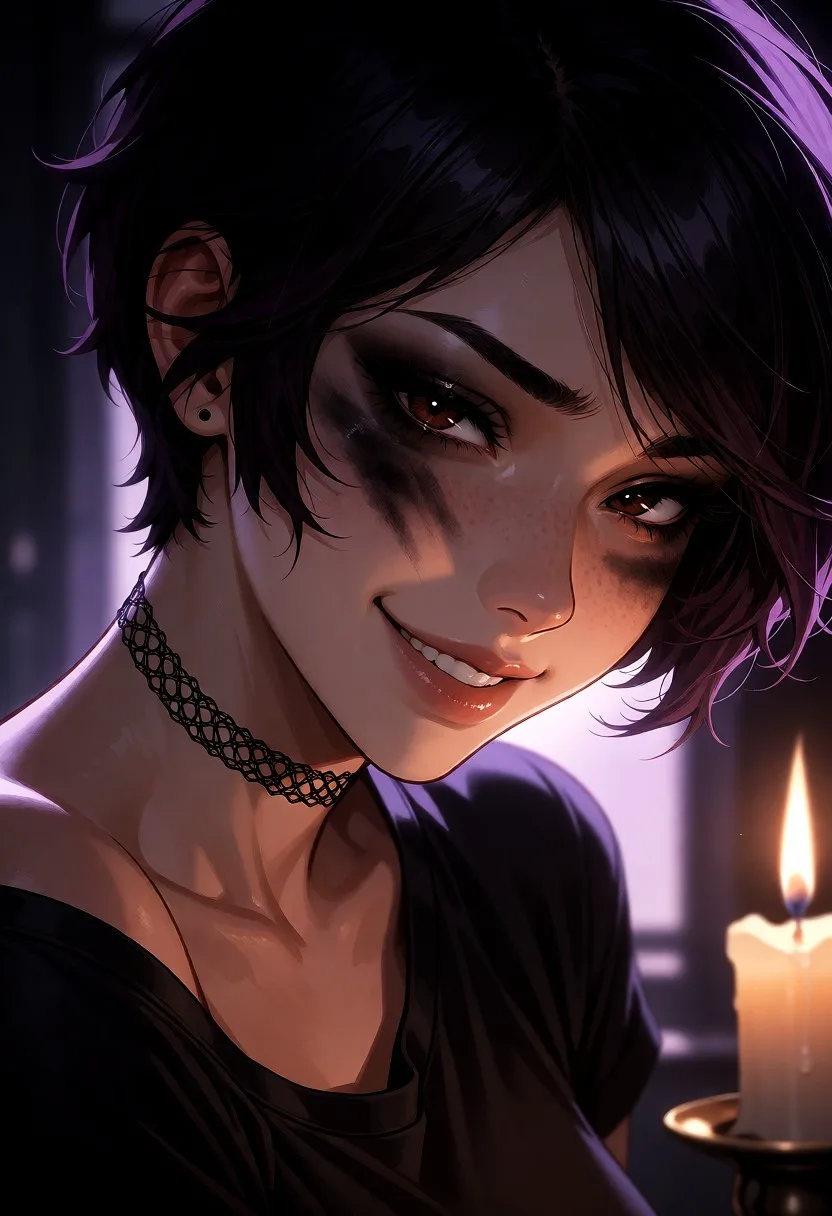
A portrait greeting image sets the opening frame of the game - pick one that matches the greeting’s mood.
Step 4 — Game master: the referee
This is the step that turns a chat into a *game*. The game master is a separate AI that reads your rules and, after every player message, decides whether the move helped or hurt — and by how much. Four fields teach it.
Target (the win condition)
One or two sentences describing what the player has to pull off to win. Be concrete: the judge scores *toward this sentence*. Vague targets make vague, unwinnable games.
TARGET — WORKED EXAMPLE
Survive and win Luna’s 2 a.m. banishing ritual: commit to the bit with total conviction, keep her believing the ghost is real, and let the ‘ritual’ escalate with mutual consent from absurd to intimate until the spirit is very thoroughly banished.
Good moves
Describe how a *good* player behaves, with examples. The judge rewards messages that look like these. Be specific — “plays along” or “is romantic” is too abstract; name the actual behaviours you want to see.
GOOD MOVES — WORKED EXAMPLE
Yes-and improvisation, treating the ritual with deadpan seriousness, inventing new ritual steps, following Luna’s lead, playful teasing, sincere heat under the comedy, reassuring her, matching her energy, escalating only with her enthusiastic consent.
Bad moves
The mirror image: what ruins the mood and drags the score down. This is where you protect the fantasy — list the things that break it.
BAD MOVES — WORKED EXAMPLE
Telling her ghosts aren’t real, breaking the bit with logic, mocking her, getting crude or grabby too fast, refusing to play, killing the mood, ignoring her signals, making her feel stupid.
Difficulty
Forgiving / Balanced / Ruthless. Difficulty sets the scoring and the game length — the player wins at +50 points and loses at −50. Forgiving is generous and quick; Ruthless punishes weak moves and makes the win feel earned. Balanced is the right default for most games; save Ruthless for players you know will work for it.
The good-moves and bad-moves lists are the soul of the game. The judge reads them almost literally, so spend your time here — concrete, specific behaviours produce a game that feels fair and readable.
Step 5 — Reward the winner
The payoff. Pick the images or videos the character “sends” when a player wins — they play one after another, in the order you set, like a little story. Save the best for last.
Win rewards — add one or more images or videos. A short video as the final reward gives players a concrete reason to come back and replay.
When the player loses — optional consolation media: a last look at what they walked away from. It softens the loss and nudges a rematch.
Generate the reward media from the character first (in the app’s image and video tools), then pick it here. A generous, well-shot reward is what turns a one-time player into a regular — it is the single biggest lever on replays.

The win reward is the payoff: set one or more images or videos, and save the best for last.
What a play session feels like
Once it is live, playing is just chatting — but every message counts. Here is the loop from the player’s side:
The greeting drops them into the scene.
They reply in character. The game master scores the move and nudges the hidden bar.
The journal quietly logs what is now true in the story, so the character stays consistent.
Good moves build toward +50 and the win; bad moves slide toward −50 and the loss.
On a win, the reward media plays. On a loss, the consolation media (if any) plays.
Players can also rate an Adventure and see its win-rate and player count, so a game that is fun *and winnable* rises. Aim for something hard enough to feel like an achievement but fair enough that a genuine effort pays off.
The full worked example, at a glance
Here is *The 2 A.M. Exorcism* as a filled-in build sheet — every field from the five steps in one place:
Character — Luna: deadpan, mischievous goth roommate, anime style.
Title — The 2 A.M. Exorcism.
Genre / style — Drama · Anime.
Description — the “lascivious poltergeist” pitch (see Step 2).
Adventure prompt — dark apartment, 2 a.m., candles and a salt shaker (see Step 3).
Greeting — Luna bursts in, grabs your hands: “Do you trust me?” (see Step 3).
Target — keep her believing, escalate with consent, banish the “spirit”.
Good moves — yes-and, deadpan commitment, invent ritual steps, sincere heat.
Bad moves — breaking the bit, mocking her, getting grabby too fast.
Difficulty — Balanced (win +50 / lose −50).
Reward — an image building to a short video; one consolation portrait on a loss.
Copy that skeleton, swap in your own character and scene, and you have a complete Adventure.
Prompt cookbook
Five starting points you can adapt. Swap the character details in braces, keep the structure — and always keep the single-subject line.
ROMANCE POSTER
Movie poster of {CHARACTER} alone, single subject, soft golden-hour light through a window, sitting on the edge of a made bed in an oversized shirt, warm inviting smile, shallow depth of field, cinematic romance. Only one person, no extra faces.
CORRUPTION / SLOW-BURN POSTER
Movie poster of {CHARACTER} alone, single subject, low-key lighting, biting her lip with a knowing look, half-lit by a neon window, moody teal-and-magenta glow, cinematic. Only one person, no extra faces, no duplicates.
FANTASY POSTER
Movie poster of {CHARACTER} alone, single subject, standing in swirling mist with a faint magical glow, ornate costume, dramatic rim light, epic cinematic fantasy. Only one person, no extra faces.
COMEDY / BIZARRE POSTER
Movie poster of {CHARACTER} alone, single subject, mid-action with a deadpan expression doing something absurd, bright playful lighting, bold comic composition, cinematic. Only one person, no extra faces.
SCENE PROMPT (ANY GENRE)
Present tense. {PLACE} at {TIME}, {LIGHT}. {CHARACTER} is {DOING SOMETHING}, {WEARING}, {MOOD}. They want {GOAL} and the scene is clearly heading somewhere.
Common mistakes
A vague target. “Have a good time” gives the judge nothing to score. Name the exact win.
Abstract good/bad moves. “Be nice” tells the judge nothing; list the real behaviours — it reads them almost word for word.
A description that is a wall of text. Players skim. A tight, punchy pitch gets more plays than a short story.
A poster with a crowd. Extra faces and duplicate figures are the number-one artifact — always add “only one person, no extra faces”.
A weak reward. The prize is the reason to play. One tiny image feels like a let-down; build toward something worth winning.
Style mismatch. An anime poster on a realistic character (or the reverse) looks wrong — match the toggle to the character.
Tips to get more players
Lead with the poster. It is the cover in the browse grid — make it clean, on-genre and single-subject.
Curiosity-gap the title. Two to five words that make someone go “wait, what?”.
Make the win legible. Players should sense what a good move is within the first exchange — the greeting and the good-moves list do that work.
Be generous early. A great first reward earns ratings and word of mouth; ratings and win-rate are what surface your game.
Balanced beats Ruthless for most. A game people can actually win gets replayed and recommended.
Sweat the good/bad moves. They are 80% of whether the game feels fun. Everything else is set-dressing.
Publishing
Build everything as a draft, playtest it yourself from the preview, then publish from the app when it is ready - publishing runs through the same moderation check as characters. Once live, your Adventure appears in the Adventures browse for other players, collects ratings and a win-rate, and you can keep editing and re-publishing new versions.
Want the character behind a great Adventure to feel fuller first? The Story Creator guide and the Scene Maker guide cover building richer characters and better generated media to reward your winners with.
Ready to build your first Adventure?
Open the Adventures builder on MyBabes, pick a character, and turn this guide into a game people play.
Try MyBabes free