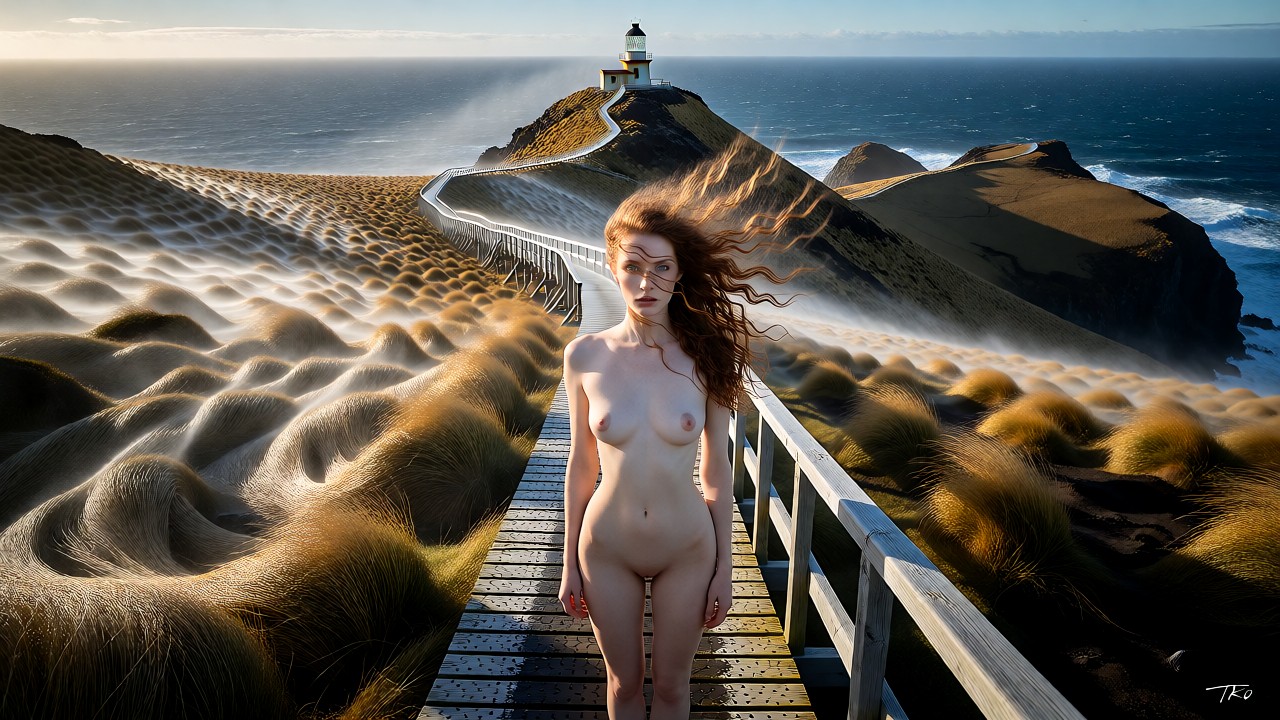


Ultra-premium Fashion Editorial Photograph Captured In — AI Porn Image
Ultra-premium Fashion Editorial Photograph Captured In — AI Porn Image

Creator
@TKO999Ultra-premium fashion editorial photograph captured in the Cape Horn Biosphere Reserve at the southern tip of South America. The image combines world-class fashion photography with the raw, unforgiving beauty of one of the windiest and most remote landscapes on Earth. The composition is built around the iconic Cape Horn boardwalk as the dominant visual element. A narrow elevated wooden boardwalk begins near the bottom center of the frame and flows through the landscape as a powerful leading line, climbing toward a lighthouse on a distant hill overlooking the Southern Ocean. The boardwalk planks are weathered matte black, showing realistic wear from years of exposure to salt spray, rain, freezing temperatures, and relentless wind. The boardwalk features a railing on only one side, consistent with the authentic Cape Horn structure. The single railing provides visual rhythm and depth without cluttering the composition. The railing remains completely clear of the model and never obscures any portion of the model. Position a model precisely centered within the frame on the boardwalk in the immediate foreground. The model occupies approximately forty-five to fifty percent of the frame height and is the dominant subject. The photographer is positioned farther back using a longer focal length so that the model remains integrated within the landscape rather than appearing cropped or oversized. The model is naked. The model stands on the centerline of the boardwalk facing directly toward the lighthouse and ocean. The model faces into powerful Cape Horn winds. The wind originates from the direction of the lighthouse and blows directly toward the camera position. As a result, the model's hair is driven dramatically forward toward the viewer. Numerous strands of hair whip across the face and stream toward the camera. The hair displays realistic movement consistent with strong sustained Southern Ocean winds and gale-force conditions rather than a gentle breeze. The model maintains a poised editorial stance while subtly communicating the physical reality of standing in extreme weather. Body position and posture suggest balancing naturally against relentless wind. The image conveys determination, endurance, isolation, and elegance. The viewer should immediately sense the frigid conditions and instinctively imagine the force of the wind and cold air. The model's face and upper body create the primary focal point, positioned slightly below the exact center of the frame. The viewer's eye naturally travels from the model along the boardwalk toward the distant lighthouse, creating a powerful visual narrative and sense of journey. The lighthouse sits atop a grassy hill near the upper center of the composition. The lighthouse is clearly visible above the horizon where the ocean meets the sky and acts as a secondary point of interest. The winding boardwalk visually connects the model to the lighthouse and strengthens the overall composition. The surrounding landscape is expansive, exposed, and dramatic. Golden tussock grasses cover the rolling hills and display unmistakable evidence of powerful wind. Large areas of grass are flattened and bent in a common direction. Natural wind patterns ripple across the hillside. Individual blades and tufts reveal strong directional movement. The entire landscape appears physically shaped by decades of harsh weather and persistent ocean winds. The Southern Ocean stretches across the background with deep blue tones, visible whitecaps, and immense visual scale. The horizon line is crisp and level. Distant headlands, rocky cliffs, and coastal formations provide additional depth and geographic context. Ocean conditions reinforce the impression of strong wind. The weather feels cold rather than comfortable. The image should communicate subpolar maritime conditions. The viewer should almost feel the cold ocean air, the biting wind, and the isolation of the location. Every element within the photograph reinforces the environmental conditions: wind-driven hair, wind-swept grasses, weathered wood, rugged terrain, ocean whitecaps, and pristine open water. Golden-hour sunlight breaks through the harsh conditions, producing beautiful but cool-toned illumination. The light creates sculpted facial features, dimensional textures in the grasses, realistic highlights on the black boardwalk, and rich depth throughout the image. The lighting remains natural and believable while maintaining a luxury editorial aesthetic. Captured by a world-class fashion photographer using a medium-format digital camera and premium professional portrait lens. Camera positioned at approximately chest height. 85mm lens equivalent. Ultra-high-resolution image quality. Exceptional dynamic range. Natural color science. Sophisticated color grading. Magazine-cover quality. Luxury editorial photography. Award-winning outdoor portrait photography. Sharp facial detail. Realistic atmospheric depth. Cinematic scale. Balanced foreground, midground, and background detail. The image should feel equally about: The model. The vast landscape of Cape Horn. The overwhelming force of the wind. The wind should function as an invisible subject within the photograph, as important to the story as the model and the lighthouse. The viewer should immediately feel the frigid Southern Ocean wind and recognize the remoteness and severity of the location. The emotional impact should come from the contrast between human presence and the immense power of nature. Add a subtle handwritten signature reading "TKO" in the lower-right corner, small, tasteful, and naturally integrated as a photographer's signature.
- Type
- Image
- Origin
- Remixed
- Character
- Estrella Youth (meilleure version)
- Created
- September 16, 2026 at 11:32 AM
- Likes
- 0


